
The Silent Crisis: Global Health Threats That Lurk Beyond Pandemic Headlines
While the world remains vigilant about potential pandemics, two equally devastating health threats continue to evolve in the shadows, demanding our immediate attention and action. Antimicrobial resistance (AMR) and emerging infectious diseases represent a growing crisis that could fundamentally alter how we treat illness and protect global health. Understanding these threats is crucial for healthcare professionals, policymakers, and individuals alike as we navigate an increasingly interconnected world where diseases know no borders. harib.site
Understanding Antimicrobial Resistance: The Silent Pandemic
Antimicrobial resistance occurs when bacteria, viruses, fungi, and parasites evolve to resist the medications designed to kill them. This phenomenon transforms once-treatable infections into potentially life-threatening conditions, creating what many experts consider a “silent pandemic” that kills more people annually than many high-profile diseases combined. harib.site
Dr. Sarah Martinez, an infectious disease specialist at Johns Hopkins, explains the gravity of the situation: “We’re witnessing patients in our ICUs fighting infections that would have been easily treatable just a decade ago. Common surgical procedures are becoming riskier because we can no longer guarantee that post-operative infections will respond to standard antibiotics.” harib.site
The Human Cost of Drug-Resistant Infections
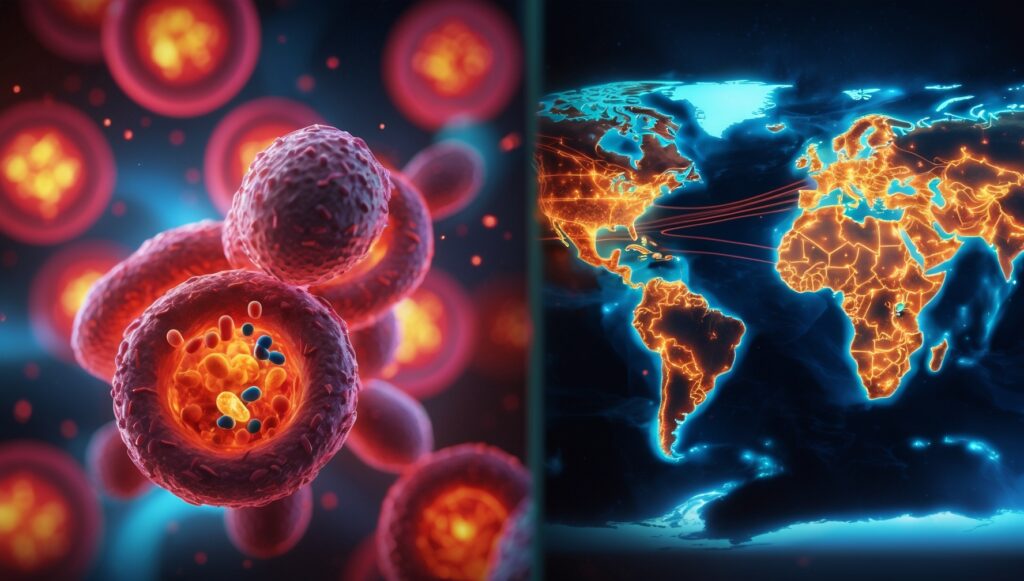
The statistics are staggering and deeply personal. Every year, antimicrobial resistance directly causes at least 1.27 million deaths worldwide, with millions more dying from infections where drug resistance played a contributing role. Behind each number lies a human story – a grandmother who couldn’t recover from a urinary tract infection, a child whose routine surgery led to complications, or a cancer patient whose compromised immune system couldn’t fight off a resistant infection. harib.site
In developing countries, the impact is particularly devastating. Maria Santos, a nurse in São Paulo, Brazil, shares her experience: “We see families torn apart by infections that should be simple to treat. Parents spend their life savings trying to access newer, more expensive antibiotics, often traveling hundreds of miles to find them. The emotional toll on families is immeasurable.” harib.site
How Resistance Develops: A Perfect Storm
The development of antimicrobial resistance isn’t accidental – it’s the result of evolutionary pressure combined with human practices that accelerate the process. Every time we use an antimicrobial drug, we create selection pressure that favors resistant organisms. The survivors multiply and spread, gradually rendering our medical arsenal less effective. harib.site
Agricultural practices significantly contribute to this crisis. Approximately 70% of medically important antibiotics are used in livestock, often for growth promotion rather than treating sick animals. This massive use creates reservoirs of resistant bacteria that can transfer to humans through food consumption, environmental contamination, and direct contact with animals. harib.site
Dr. Michael Chen, a veterinary epidemiologist, observed this firsthand during his research in rural communities: “Farmers often use antibiotics preventively in their livestock, not realizing they’re creating superbugs that eventually affect their own families. The interconnection between animal health, environmental health, and human health is undeniable.” harib.site
The Economics of Resistance
The financial implications of antimicrobial resistance extend far beyond healthcare costs. Resistant infections require longer hospital stays, more expensive treatments, and often result in prolonged illness or death, reducing productivity and economic output. The World Bank estimates that AMR could reduce global GDP by 1.1% to 3.8% by 2050, with the poorest countries bearing the heaviest burden. harib.site
Healthcare systems worldwide are already straining under the economic pressure. In the United States alone, antibiotic-resistant infections add approximately $20 billion in direct healthcare costs annually, with additional productivity losses of $35 billion. These figures don’t capture the intangible costs – the emotional trauma of families watching loved ones suffer from untreatable infections, or the anxiety healthcare workers feel when their usual treatments fail. harib.site
Emerging Infectious Diseases: Nature’s Wild Cards
While antimicrobial resistance makes existing diseases harder to treat, emerging infectious diseases represent entirely new threats to global health security. These diseases appear in human populations for the first time or have existed previously but are rapidly increasing in incidence or geographic range. harib.site
The Perfect Conditions for Disease Emergence
Several interconnected factors create ideal conditions for new diseases to emerge and spread. Climate change alters ecosystems and expands the geographic range of disease vectors like mosquitoes and ticks. Deforestation and urbanization bring humans into closer contact with wildlife, increasing opportunities for zoonotic spillover – the jump of pathogens from animals to humans. harib.site
Global travel and trade networks, while essential for modern commerce and communication, can rapidly transport pathogens across continents. A person can be infected in one country and symptomatic on another continent within 24 hours, as we witnessed during the early days of COVID-19. harib.site
Dr. Jennifer Park, who studies disease emergence at the CDC, reflects on her field experience: “I’ve investigated outbreaks in remote villages that seemed contained locally, only to discover cases in major cities weeks later. The speed at which diseases can spread in our interconnected world is both fascinating and terrifying from a public health perspective.” harib.site
Recent Emerging Threats: Lessons from the Field
The 21st century has already witnessed several significant disease emergences that highlight the ongoing threat. SARS-CoV-2, the virus causing COVID-19, demonstrated how quickly a novel pathogen could disrupt global society. However, other emerging diseases continue to pose threats that receive less public attention but remain critically important. harib.site
Nipah virus, first identified in Malaysia in 1998, continues to cause periodic outbreaks with case fatality rates ranging from 40% to 75%. The virus spreads from bats to humans, often through intermediate animal hosts or contaminated food products. In Bangladesh and India, Nipah outbreaks have created significant anxiety in rural communities where fruit bats are common. harib.site
Rashida Begum, a community health worker in rural Bangladesh, describes the fear that grips villages during Nipah outbreaks: “People become afraid to eat fresh fruit, especially dates, because they know bats might have contaminated them. Families stop their children from playing outside at dawn or dusk when bats are active. The psychological impact extends far beyond the actual cases.” harib.site
The Role of Wildlife and Environmental Change
Approximately 75% of emerging infectious diseases are zoonotic, originating in animals before jumping to humans. This connection makes wildlife health and environmental conservation critical components of global health security. As human activities increasingly encroach on natural habitats, the likelihood of encountering novel pathogens increases. harib.site
Climate change acts as a threat multiplier, expanding the geographic range of disease vectors and creating new ecological niches for pathogen transmission. Warmer temperatures allow mosquito-borne diseases like dengue fever, chikungunya, and Zika virus to spread to previously temperate regions. harib.site
Dr. Robert Thompson, an ecologist studying disease emergence, spent years tracking how environmental changes affect pathogen dynamics: “We’re witnessing diseases appear in places where they’ve never been seen before. Malaria cases at higher altitudes, tick-borne diseases in northern latitudes – the geographic boundaries of infectious diseases are shifting as our planet warms.” harib.site

The Intersection of Global Threats
Antimicrobial resistance and emerging infectious diseases don’t exist in isolation – they intersect and amplify each other’s impact. New diseases may be resistant to existing treatments from the outset, or may quickly develop resistance due to inappropriate or excessive antimicrobial use during outbreak responses. harib.site
During the COVID-19 pandemic, many patients with severe illness received antibiotics to prevent or treat secondary bacterial infections. This widespread antibiotic use, while medically justified in many cases, contributed to the selection pressure for resistant bacteria. Healthcare workers reported seeing unusual patterns of resistance in COVID-19 patients, highlighting how crisis responses can inadvertently accelerate AMR. harib.site
Building Resilient Health Systems
Addressing these interconnected threats requires health systems that can adapt quickly to new challenges while maintaining effective responses to existing ones. This means strengthening surveillance systems to detect emerging threats early, maintaining robust laboratory capabilities for rapid diagnosis, and ensuring healthcare workers have the training and resources needed to respond effectively. harib.site
Successful examples exist worldwide. Singapore’s disease surveillance system integrates data from hospitals, clinics, laboratories, and even social media to provide early warning of potential outbreaks. This comprehensive approach allowed for rapid detection and response to several emerging disease threats, preventing larger outbreaks. harib.site
Community-Level Solutions and Individual Actions
While global health threats may seem overwhelming, communities and individuals play crucial roles in prevention and response. Community health education programs can help people understand when antibiotics are appropriate and ensure they complete prescribed courses, reducing the development of resistance. harib.site
Local mosquito control programs, proper food safety practices, and responsible pet ownership all contribute to reducing disease transmission risks. These seemingly small actions, when implemented widely, can have significant cumulative effects on public health. harib.site
Ahmed Al-Rashid, a community health educator in rural Morocco, has seen firsthand how education changes behavior: “When we explain to families how bacteria become resistant when antibiotics aren’t taken properly, they understand. When we show them how standing water breeds mosquitoes that spread disease, they take action. People want to protect their families – they just need to understand how.” harib.site
Innovation and Hope for the Future
Despite the challenges, remarkable innovations offer hope for addressing these global health threats. New diagnostic technologies can identify resistant infections within hours rather than days, allowing for targeted treatment and reducing unnecessary antibiotic use. Advanced surveillance systems use artificial intelligence to predict disease outbreaks before they occur. harib.site
Research into novel antimicrobial compounds continues, with scientists exploring everything from bacteriophages (viruses that kill bacteria) to antimicrobial peptides derived from natural sources. Gene therapy approaches show promise for treating resistant infections, while vaccine development could prevent many diseases from emerging or spreading. harib.site
Dr. Lisa Wang, a researcher developing new antimicrobial compounds, remains optimistic: “Every day, we’re learning more about how pathogens develop resistance and how we can stay ahead of them. The key is sustained investment in research and development, combined with responsible use of the tools we have today.” harib.site
The Path Forward: A Global Response to Global Threats
Addressing antimicrobial resistance and emerging infectious diseases requires unprecedented global cooperation and sustained commitment. No single country, organization, or sector can solve these problems alone. Success demands coordinated action across human health, animal health, environmental health, and agricultural sectors – an approach known as “One Health.” harib.site
International cooperation through organizations like the World Health Organization, the Food and Agriculture Organization, and the World Organisation for Animal Health provides frameworks for coordinated responses. However, these efforts require adequate funding, political commitment, and community engagement to be truly effective. harib.site
The stakes couldn’t be higher. Without decisive action, we face a future where common infections become deadly, routine surgeries become high-risk procedures, and new diseases emerge faster than we can develop treatments. But with committed global action, community engagement, and continued innovation, we can build a more resilient and healthier world for future generations. harib.site
The choice is ours, and the time to act is now. These silent threats may not dominate headlines like pandemics, but their impact on human health and society will be felt for generations to come. Understanding, preparing for, and actively addressing antimicrobial resistance and emerging infectious diseases isn’t just a matter of global health policy – it’s a fundamental requirement for protecting the health and wellbeing of everyone we care about. harib.site